














 Sign In to Access Account


 Allergen Filter
 Allergen Filter


Let's Breakdown the Basics of This Skin Condition
 BY SKINSAFE MEDICAL EDITORIAL TEAM
 APR 08, 2026
 0
0
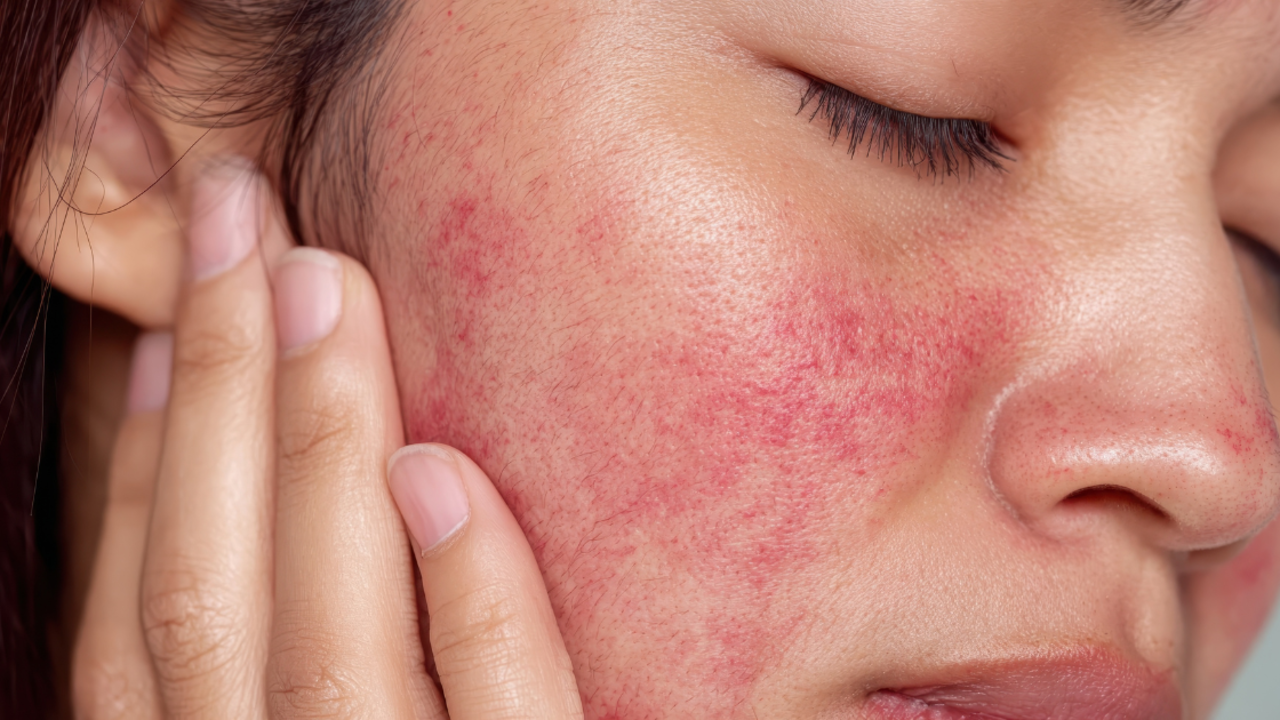
In honor of Rosacea Awareness Month, we will be focusing on rosacea, a very common, but often misunderstood, skin condition.
Rosacea is a chronic (long-term) skin condition that affects the face, which presents with persistent redness, easy flushing, and sometimes acne-like bumps. While it isn’t dangerous, rosacea can be frustrating and may affect confidence and daily life. Rosacea is more common than many people realize, affecting 1 in 20 people worldwide. It typically appears between ages 30 to 50 and is more commonly seen in women, though it can affect people of all skin types and backgrounds.
What causes rosacea?
The exact cause of rosacea isn’t fully understood, but several factors likely play a role, including:
- Genetics
- An overactive immune response
- Increased sensitivity of facial blood vessels
- Common skin microorganisms
- Long term sun damage
Many people with rosacea notice that certain triggers can make symptoms worse. Common triggers include:
- Sun exposure
- Strong emotions (excitement, embarrassment, etc.)
- Spicy foods or hot beverages
- Alcohol intake
- Warm environments
Learning your personal triggers is an important step in managing your rosacea.
Common Types of Rosacea:
Rosacea can look different from person to person. There are four main subtypes, and it’s common to have features of more than one:
- Papulopustular rosacea (Papulo- = small red bumps, -pustular = pus-filled bumps): often mistaken for acne, this type causes red bumps and pus-filled pimples on a background of facial redness.
- Erythematotelangiectatic rosacea (Erythema = redness, telangiectatic = visible small blood vessels): this form is marked by persistent redness and visible small blood vessels, along with frequent flushing.
- Phymatous rosacea: a less common type that leads to thickened, bumpy skin, most often affecting the nose.
- Ocular rosacea: affects the eyes, causing dryness, irritation, tearing, or a gritty sensation. Some people may also develop eyelid inflammation or styes.
How is Rosacea Treated?
While there is no cure for rosacea, the good news is that effective long-term treatments are available to help control symptoms and improve your skin. It is important to be patient, as most treatments take 3-6 months to show noticeable improvement.
The foundation of rosacea-friendly skincare:
- Avoid known triggers whenever possible.
- Use a gentle, pH-balanced cleanser (instead of drying, harsh soaps)
- Avoid peak hours of the sun, wear sun protective clothing like a broad-brimmed hat, and apply a broad-spectrum sunscreen, SPF >30, daily.
- Keep skin hydrated with a gentle moisturizer daily
Together with your dermatologist, treatment options may include:
- Prescription topical creams/gels
- Oral medications for more severe symptoms
- Laser or light-based treatments to reduce redness and visible vessels.
If your eyes are affected, your dermatologist may recommend seeing an eye specialist (ophthalmologist) for additional care.
Final Thoughts:
Taking care of rosacea is a journey, but with the right approach, most people can achieve clearer, calmer skin and feel more confident day to day. Take a look at our article, “Skincare for Rosacea,” for tips on building a rosacea-friendly skincare routine.
References:
1. Farshchian M, Daveluy S. Rosacea. [Updated 2023 Aug 8]. In: StatPearls [Internet]. Treasure Island (FL): StatPearls Publishing; 2026 Jan-. Available from: https://www.ncbi.nlm.nih.gov/b...
2. Gether L, Overgaard LK, Egeberg A, Thyssen JP. Incidence and prevalence of rosacea: a systematic review and meta-analysis. Br J Dermatol. 2018 Aug;179(2):282-289. doi: 10.1111/bjd.16481.
3. Schaller M, Almeida LMC, Bewley A, Cribier B, Del Rosso J, Dlova NC, Gallo RL, Granstein RD, Kautz G, Mannis MJ, Micali G, Oon HH, Rajagopalan M, Steinhoff M, Tanghetti E, Thiboutot D, Troielli P, Webster G, Zierhut M, van Zuuren EJ, Tan J. Recommendations for rosacea diagnosis, classification and management: update from the global ROSacea COnsensus 2019 panel. Br J Dermatol. 2020 May;182(5):1269-1276.: 10.1111/bjd.18420.
4. Crawford GH, Pelle MT, James WD. Rosacea: I. Etiology, pathogenesis, and subtype classification. J Am Acad Dermatol. 2004 Sep;51(3):327-41; quiz 342-4. doi: 10.1016/j.jaad.2004.03.030.